
Brief Encyclopedia Signs and symbols of Kazakh culture
Buttons
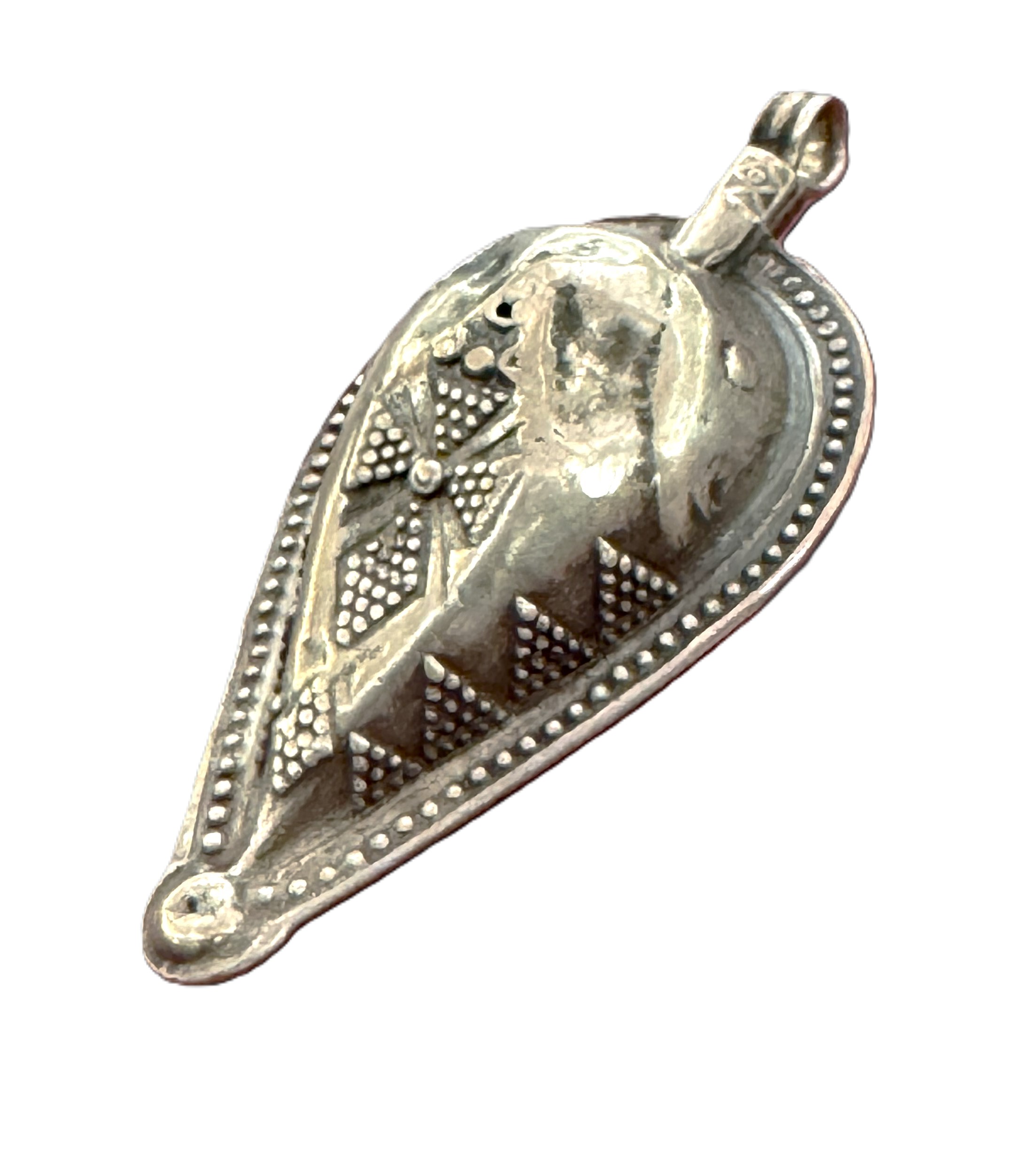
Buttons in all cultures had a number of functions, which V. D. Narozhnaya defines as follows: utilitarian (button as a fastener), decorative and aesthetic (button as an ornament), magical (button as an amulet or talisman), semiotic or informative (button as an identifier) [7]. Of course, these functions were the same for the wearer of the culture. In some models of Kazakh buttons (and even volumetric rings) the cavity was empty, in which the master usually inserted a piece of metal or small beads that produced a sound when moved. This ringing, according to the ancient nomads, was a link between the heavenly and earthly spheres (like the ringing of a sholpy). They were also peculiar amulets. In Kazakh culture the buttons are called tuime, but the Kazakhs also call them snake. According to A. T. Onalbaeva and others, because of the prohibition of pronunciation, the snake-zhylan «was given a veiled name – tüime. Thus, zhylan and tüime formally became synonyms» [10, p. 169]. Another type of button brooch that existed in Turkic culture is the object «tana». Usually «tana» is a plaque in the form of a circle with a small diameter (1.5–3 cm). In Altai, a round ornament of the same name made of bone, horn, mother-of-pearl or faience with a hole in the centre was attached to a braid on the wedding day and later worn by young women only on their braids. Among the Kazakhs there was a tradition of «tana tağu»: They were sewn on dresses, headdresses, braid ribbons, etc. Kazakhs called a plaque with a stone insert in the centre «köz tana», with gilding «altyn tana», with a false grain «sirkeli tana». The name of the jewellery itself goes back to the meaning of «big and twisted eyes». The name «közi tanadai eken» (beautiful big eyes) is still a common expression in people’s minds. Қапсырманың функционалдығы – әйелдер камзолының шеттерін бел аймағында бекіту, қапсыру кіндік аймағының деңгейіне сәйкес келді. Әдетте, бұйым екі бөліктен, яғни қашықтан қарағанда көбелектің пішініне ұқсайтын айылбастардан тұрады. Бұл әшекейлер өте мұқият безендірілген, яғни тастар түрінде кірістірулер болуы мүмкін, шілтерлі өрнектер, қаралтымдау, алтын жалату және т.б. қолданылды, бұл иесінің байлық деңгейін көрсетеді. Костюмнің бұл бөлшегі тек ою-өрнек және «ілмек» құрылғысы ғана емес, сонымен қатар кіндік аймағын (немесе жалпы іш қуысын) дененің қасиетті бөлігі ретінде қорғады / белгіледі. 9. Руденко К. А. Сокровища тюркской культуры: новые исследования по ювелирному искусству тюркских народов (обсуждение итогов и перспектив) // Историческая этнология. 2019. Т. 4, № 1. С. 26–45. DOI: 10.22378/he.2019-41.26-45 10. Оналбаева А. Т., Орынханова Г. А., Аскарова Г. С. Табу и табуированная лексика в казахском языке // Вестник КазНПУ им. Абая, серия «Филология». – № 3 (73). – 2020. – С. 164–170. 11. Содномпилова М. М. Роскошь в кочевой культуре: женские украшения как маркер культур. ной идентичности номадов Центральной Азии // Известия Иркутского государственного университета. Серия Геоархеология. Этнология. Антропология. 2018. Т. 24. С. 93–105. https:// doi.org/10.26516/2227-2380.2018.24.93 12. Сычева Н. С. Ювелирные украшения народов Средней Азии и Казахстана XIX–XX веков. Из Собрания Государственного музея искусства народов Восток. М.: Художник, 1984. – 180 с. 13. Тохтабаев Ш. Ж. Серебряный путь казахских мастеров. Алматы: Дайк-Пресс, 2005. – 474 с. 14. Шалгинбаева С. Х., Бояринцева К. Е. Ювелирные украшения в культуре казахов: трансформация традиций в современных условиях // Известия Алтайского государственного университета, 2022, № 3(125). С. 51–56 DOI: 10.14258/izvasu (2022)3-08. URL: http://izvestiya. asu.ru/article/view/%282022%293-08.
ШайгОзова Ж.Н., Наурзбаева А. Б.
Краткая энциклопедия знаков и символов казахской культуры.
Алматы: КазНИИК, 2023.